Buy miragespa.eu ?
We are moving the project
miragespa.eu .
Are you interested in purchasing the domain
miragespa.eu ?
domain@kv-gmbh.de · 0541-91531010
Buy miragespa.eu ?
What is the difference between proportional and inverse proportional?
Proportional and inverse proportional relationships are two types of relationships between two variables. In a proportional relationship, as one variable increases, the other variable also increases at a constant rate. This means that the ratio between the two variables remains the same. In an inverse proportional relationship, as one variable increases, the other variable decreases at a constant rate. This means that the product of the two variables remains constant. **
How can one recognize proportional and inverse proportional relationships?
Proportional relationships can be recognized when two quantities increase or decrease at the same rate. This means that when one quantity doubles, the other quantity also doubles. Inverse proportional relationships, on the other hand, can be recognized when one quantity increases while the other decreases at a constant rate, or vice versa. This means that when one quantity doubles, the other quantity is halved. One can recognize these relationships by plotting the data on a graph and observing if the points form a straight line through the origin for proportional relationships, or if the points form a curve for inverse proportional relationships. **


Similar search terms for Non-proportional
Top-Angebote
Products related to Non-proportional:
-
JoyToys Apple Squishy Stress Relief Toy Moldable Non Bounce Fidget Toy For Sensory Relaxation Apple Squishy Stress Relief Toy Moldable Non Bounce Fidget Toy For Sensory RelaxationTurn everyday stress into satisfying sensory fun with this Apple Squishy that's designed to help you relax, focus, and unwind. Featuring a unique moldable, nonbounce texture, this Stress Relief Toy holds its shape when squeezed for an incredibly...34,97 $*Shipping: 0,00 $Secure redirect to the provider
-
StayWell Acupressure Non Pierced Earrings For Weight Loss Stylish Slimming Accessories & Wellness Gifts GoldAcupressure NonPierced Earrings for Natural Weight LossAre you tired of endless diets and strenuous workouts without seeing the desired results Discover a natural and effortless solution with our Acupressure NonPierced Earrings. These elegant...20,97 $*Shipping: 0,00 $Secure redirect to the provider
-
440 lbs. Weight Capacity Non-Slip Outdoor Step by North American Health+Wellness in Gray"Large platform makes it easier for those with limited ability to lift their feet and remain steady while stepping up. Comes with a slip-resistant rubber mat. Dimensions: 19 1/4""W x 15 1/2""L x 4""HPP/LDPE/TPRMax. weight: 440 lbs.Use on flat..."49,99 $*Shipping: 16,98 $Secure redirect to the provider
-
Orion The Telomere Effect by Elizabeth Blackburn & Elissa Epel - Paperback Health & Longevity Book - Non-Fiction Wellness GuideDiscover the secrets of healthy ageing with 'The Telomere Effect' by Elizabeth Blackburn and Elissa Epel. This groundbreaking guide, written for adult readers, reveals how everyday lifestyle choices can impact our cellular ageing and telomeres. Drawing on decades of research, the authors provide clear, actionable guidance for living a healthier, longer life. Dr Elizabeth Blackburn, a Nobel Prize-winning biologist, teams up with Dr Elissa Epel, a leading health psychologist, to distill complex biology into accessible advice. This paperback edition is a must-read for anyone interested in understanding the science behind healthy ageing and taking control of their own well-being.2,99 £*Shipping: 2,99 £Secure redirect to the provider




-
What is the difference between proportional relationships and inverse proportional relationships?
Proportional relationships are those in which the two variables increase or decrease at a constant rate. In other words, when one variable doubles, the other variable also doubles. In contrast, inverse proportional relationships are those in which one variable increases as the other decreases, and vice versa. In an inverse proportional relationship, the product of the two variables remains constant. In other words, when one variable doubles, the other variable is halved. **
-
What are proportional relationships?
Proportional relationships are relationships between two quantities where they change in a consistent manner. This means that as one quantity increases or decreases, the other quantity also increases or decreases in a predictable way. In a proportional relationship, the ratio between the two quantities remains constant. This can be represented by a straight line when graphed. **
-
Which of the assignments is inversely proportional and which is directly proportional?
The assignment of distance traveled and time taken is inversely proportional, as the distance traveled decreases as the time taken increases. On the other hand, the assignment of force and acceleration is directly proportional, as the force increases, the acceleration also increases. **
-
How can I recognize if a function is proportional or inversely proportional?
You can recognize if a function is proportional by checking if the ratio of the output to the input is constant. In other words, if the function can be written in the form y = kx, where k is a constant, then the function is proportional. On the other hand, if the function can be written in the form y = k/x, where k is a constant, then the function is inversely proportional. Additionally, if the graph of the function is a straight line passing through the origin, it is proportional, while if the graph is a hyperbola, it is inversely proportional. **

Which of the relationships is inversely proportional and which is directly proportional?
The relationship between the distance traveled and the time taken is inversely proportional, as the faster you travel, the less time it takes to reach a destination. On the other hand, the relationship between the force applied and the acceleration produced is directly proportional, as increasing the force applied will result in a corresponding increase in acceleration. **
How can one determine whether it is a proportional or inverse proportional relationship?
One can determine whether a relationship is proportional or inverse proportional by examining the pattern of the data points. In a proportional relationship, as one variable increases, the other variable also increases at a constant rate. This results in a straight line passing through the origin when the data is plotted on a graph. In an inverse proportional relationship, as one variable increases, the other variable decreases at a constant rate. This relationship is represented by a curve that approaches but never touches either axis when graphed. **
Top-Angebote
Products related to Non-proportional:
-
Beverly Rug Serenity Solid Modern Non Slip Soft Indoor Area RugTransform your living space with Our Contemporary Solid Area Rugs. Our exceptional assortment of solid rectangular area rugs serves as the ideal cornerstone for any room in search of refinement.77,99 $*Shipping: 0,00 $Secure redirect to the provider
-
I Love Wellness Calm bath salt for relaxation 500 gI Love Wellness Calm, 500 g, Bath Salts for Women, Do you love long baths in nice hot water? Your favourite relaxation ritual can be enhanced and taken to another level by I Love Wellness Calmbath salts. It lets you create a fragrant salt bath right in your own home, allowing tension and feelings of inner turmoil to melt away while creating a wonderful sense of well-being. But you don't just get the relaxation you deserve, although the intoxicating smell of salt certainly invites you to do so. Apart from relaxation, your body will also be treated to regeneration. Salt is rich in natural minerals, so it will help with skin regeneration and contribute to relieving any skin issues you may have. Characteristics: relaxing effect has a pleasant fragrance moisturises and softens strengthens the skin’s defences has a relaxing effect on the muscles of the body Ingredients: vegan product camomile extract – soothes, counteracts irritation, helps reduce redness and promotes regeneration How to use: Pour into a warm bath and allow to dissolve.9,70 £*Shipping: 3,99 £Secure redirect to the provider
-
JoyToys Apple Squishy Stress Relief Toy Moldable Non Bounce Fidget Toy For Sensory Relaxation Apple Squishy Stress Relief Toy Moldable Non Bounce Fidget Toy For Sensory RelaxationTurn everyday stress into satisfying sensory fun with this Apple Squishy that's designed to help you relax, focus, and unwind. Featuring a unique moldable, nonbounce texture, this Stress Relief Toy holds its shape when squeezed for an incredibly...34,97 $*Shipping: 0,00 $Secure redirect to the provider
-
StayWell Acupressure Non Pierced Earrings For Weight Loss Stylish Slimming Accessories & Wellness Gifts GoldAcupressure NonPierced Earrings for Natural Weight LossAre you tired of endless diets and strenuous workouts without seeing the desired results Discover a natural and effortless solution with our Acupressure NonPierced Earrings. These elegant...20,97 $*Shipping: 0,00 $Secure redirect to the provider
-
What is the difference between proportional and inverse proportional?
Proportional and inverse proportional relationships are two types of relationships between two variables. In a proportional relationship, as one variable increases, the other variable also increases at a constant rate. This means that the ratio between the two variables remains the same. In an inverse proportional relationship, as one variable increases, the other variable decreases at a constant rate. This means that the product of the two variables remains constant. **
-
How can one recognize proportional and inverse proportional relationships?
Proportional relationships can be recognized when two quantities increase or decrease at the same rate. This means that when one quantity doubles, the other quantity also doubles. Inverse proportional relationships, on the other hand, can be recognized when one quantity increases while the other decreases at a constant rate, or vice versa. This means that when one quantity doubles, the other quantity is halved. One can recognize these relationships by plotting the data on a graph and observing if the points form a straight line through the origin for proportional relationships, or if the points form a curve for inverse proportional relationships. **
-
What is the difference between proportional relationships and inverse proportional relationships?
Proportional relationships are those in which the two variables increase or decrease at a constant rate. In other words, when one variable doubles, the other variable also doubles. In contrast, inverse proportional relationships are those in which one variable increases as the other decreases, and vice versa. In an inverse proportional relationship, the product of the two variables remains constant. In other words, when one variable doubles, the other variable is halved. **
-
What are proportional relationships?
Proportional relationships are relationships between two quantities where they change in a consistent manner. This means that as one quantity increases or decreases, the other quantity also increases or decreases in a predictable way. In a proportional relationship, the ratio between the two quantities remains constant. This can be represented by a straight line when graphed. **
Similar search terms for Non-proportional
-
440 lbs. Weight Capacity Non-Slip Outdoor Step by North American Health+Wellness in Gray"Large platform makes it easier for those with limited ability to lift their feet and remain steady while stepping up. Comes with a slip-resistant rubber mat. Dimensions: 19 1/4""W x 15 1/2""L x 4""HPP/LDPE/TPRMax. weight: 440 lbs.Use on flat..."49,99 $*Shipping: 16,98 $Secure redirect to the provider
-
Orion The Telomere Effect by Elizabeth Blackburn & Elissa Epel - Paperback Health & Longevity Book - Non-Fiction Wellness GuideDiscover the secrets of healthy ageing with 'The Telomere Effect' by Elizabeth Blackburn and Elissa Epel. This groundbreaking guide, written for adult readers, reveals how everyday lifestyle choices can impact our cellular ageing and telomeres. Drawing on decades of research, the authors provide clear, actionable guidance for living a healthier, longer life. Dr Elizabeth Blackburn, a Nobel Prize-winning biologist, teams up with Dr Elissa Epel, a leading health psychologist, to distill complex biology into accessible advice. This paperback edition is a must-read for anyone interested in understanding the science behind healthy ageing and taking control of their own well-being.2,99 £*Shipping: 2,99 £Secure redirect to the provider
-
Dove Purely Pampering Shea Butter & Vanilla setDove Purely Pampering Shea Butter & Vanilla, 1 pc, Cosmetic Sets for Women, Discover a practical bundle of products designed to enhance your everyday moments. DovePurely PamperingShea Butter & Vanilla set takes the hassle out of choosing by offering a combination of popular products. Now available together in one convenient pack. The set contains: Dove Purely Pampering Shea Butter & Vanilla creamy tablet for washing 3x90.00 g Characteristics: cleans skin deeply cleans the skin gently do not irritate or dry out skin nourishes and hydrates protects the skin soothes irritation gives a rich lather Ingredients: shea butter – nourishes, helps retain necessary hydration in skin, adds softness and smoothness, provides protection against drying and harmful external influences How to use: Follow the instructions on the package. Apply the soap to the skin, lather gently, and massage. Rinse with lukewarm water. Apply at any time during the day.4,30 £*Shipping: 3,99 £Secure redirect to the provider
-
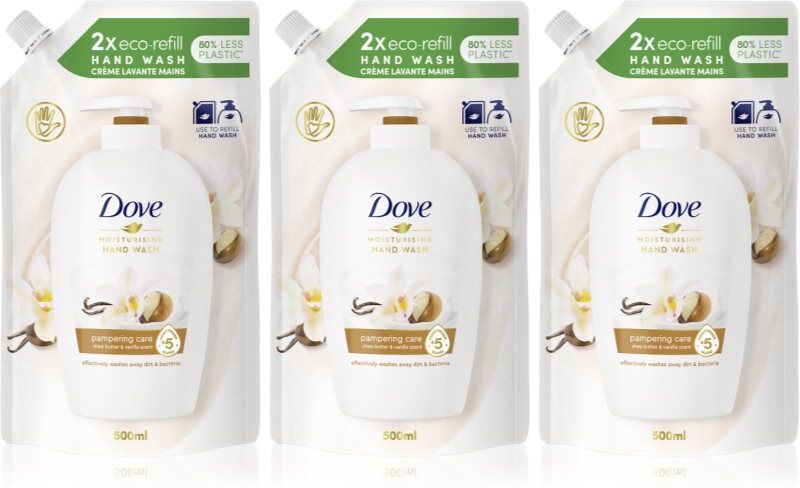
Dove Moisturizing Hand Wash Pampering Care setDove Moisturizing Hand Wash Pampering Care, 1 pc, Refills for Women, Discover a practical bundle of products designed to enhance your everyday moments. DoveMoisturizing Hand WashPampering Care set takes the hassle out of choosing by offering a combination of popular products. Now available together in one convenient pack. The set contains: Dove Purely Pampering Shea Butter & Vanilla liquid soap refill 3x500.00 ml Characteristics: a set at a favourable price has a pleasant fragrance leaves a refreshing feeling has softening effects nature-friendly packaging Ingredients: shea butter – nourishes, helps retain necessary hydration in skin, adds softness and smoothness, provides protection against drying and harmful external influences How to use: Follow the instructions on the package.6,90 £*Shipping: 3,99 £Secure redirect to the provider
-
Which of the assignments is inversely proportional and which is directly proportional?
The assignment of distance traveled and time taken is inversely proportional, as the distance traveled decreases as the time taken increases. On the other hand, the assignment of force and acceleration is directly proportional, as the force increases, the acceleration also increases. **
-
How can I recognize if a function is proportional or inversely proportional?
You can recognize if a function is proportional by checking if the ratio of the output to the input is constant. In other words, if the function can be written in the form y = kx, where k is a constant, then the function is proportional. On the other hand, if the function can be written in the form y = k/x, where k is a constant, then the function is inversely proportional. Additionally, if the graph of the function is a straight line passing through the origin, it is proportional, while if the graph is a hyperbola, it is inversely proportional. **
-
Which of the relationships is inversely proportional and which is directly proportional?
The relationship between the distance traveled and the time taken is inversely proportional, as the faster you travel, the less time it takes to reach a destination. On the other hand, the relationship between the force applied and the acceleration produced is directly proportional, as increasing the force applied will result in a corresponding increase in acceleration. **
-
How can one determine whether it is a proportional or inverse proportional relationship?
One can determine whether a relationship is proportional or inverse proportional by examining the pattern of the data points. In a proportional relationship, as one variable increases, the other variable also increases at a constant rate. This results in a straight line passing through the origin when the data is plotted on a graph. In an inverse proportional relationship, as one variable increases, the other variable decreases at a constant rate. This relationship is represented by a curve that approaches but never touches either axis when graphed. **
* All prices are inclusive of VAT and, if applicable, plus shipping costs. The offer information is based on the details provided by the respective shop and is updated through automated processes. Real-time updates do not occur, so deviations can occur in individual cases. ** Note: Parts of this content were created by AI.