Buy miragespa.eu ?
We are moving the project
miragespa.eu .
Are you interested in purchasing the domain
miragespa.eu ?
domain@kv-gmbh.de · 0541-91531010
Buy miragespa.eu ?
What is morality?
Morality refers to a set of principles or values that guide individuals on what is considered right or wrong behavior. It is a code of conduct that helps people make ethical decisions and distinguish between good and bad actions. Morality is often influenced by cultural, religious, and societal norms, and it plays a crucial role in shaping how individuals interact with others and navigate complex ethical dilemmas. **
Is there only subjective morality or is there also objective morality?
There is ongoing debate about whether morality is purely subjective or if there are objective moral truths. Some argue that morality is entirely subjective, meaning that it is based on individual beliefs, cultural norms, and personal experiences. Others believe in the existence of objective moral principles that are independent of individual perspectives and cultural influences. This debate is complex and has been discussed by philosophers and ethicists for centuries, and there is no consensus on the matter. **

Similar search terms for Morality
Top-Angebote
Products related to Morality:
-
Nourison Tranquility Area RugDiscover a special feeling of serene elegance in this uniquely refined collection of contemporary area rugs. In subtly varied palettes of soft color and muted neutrals, these distinctive designs will grace any room with a note of quiet sophistication.249,00 $*Shipping: 0,00 $Secure redirect to the provider
-
Nourison Tranquility Area RugDiscover a special feeling of serene elegance in this uniquely refined collection of contemporary area rugs. In subtly varied palettes of soft color and muted neutrals, these distinctive designs will grace any room with a note of quiet sophistication.949,00 $*Shipping: 0,00 $Secure redirect to the provider
-
Nourison Tranquility Area RugDiscover a special feeling of serene elegance in this uniquely refined collection of contemporary area rugs. In subtly varied palettes of soft color and muted neutrals, these distinctive designs will grace any room with a note of quiet sophistication.199,00 $*Shipping: 0,00 $Secure redirect to the provider


-
Did Nietzsche want to abolish morality or enforce the master morality?
Nietzsche did not want to abolish morality altogether, but rather to challenge and critique the existing moral values of his time. He sought to undermine the traditional Christian morality, which he saw as promoting weakness and submission, and instead advocated for the reevaluation and redefinition of values based on what he called the "master morality." This master morality emphasized strength, power, and individual will, and Nietzsche believed it to be more in line with human nature and the pursuit of greatness. Therefore, Nietzsche aimed to enforce the master morality as a replacement for the prevailing moral values of his time. **
-
Can one afford morality?
Morality is not something that can be bought or sold, as it is a set of principles and values that guide one's actions and decisions. While there may be costs associated with living a moral life, such as making sacrifices or facing challenges, ultimately, morality is a choice that individuals make based on their beliefs and values. Therefore, one can afford morality by prioritizing it in their decision-making and actions, regardless of their financial situation. **
-
What is Philistine morality?
Philistine morality refers to a set of values and beliefs that prioritize material wealth, superficial appearances, and conformity to societal norms over deeper ethical considerations. It is often associated with a lack of intellectual or artistic appreciation, as well as a focus on immediate gratification and self-interest. The term "Philistine" originally referred to a group of people in ancient times who were considered uncultured and unrefined, and today it is used metaphorically to criticize individuals or societies that prioritize materialism and conformity over more meaningful or ethical pursuits. **
-
Is morality scientifically explainable?
Morality is a complex concept that is influenced by a variety of factors, including cultural, social, and psychological elements. While scientific research can provide insights into the origins and development of moral beliefs and behaviors, it may not be able to fully explain the subjective and value-laden nature of morality. Additionally, moral judgments often involve emotions, intuitions, and personal experiences that may not be easily captured or explained by scientific methods alone. Therefore, while science can contribute to our understanding of morality, it may not be able to provide a complete and definitive explanation. **


Does morality bring happiness?
Morality can bring happiness in the sense that living a moral life can lead to a sense of fulfillment, inner peace, and positive relationships with others. When we act in accordance with our moral values, we often experience a sense of satisfaction and contentment. However, it's important to note that happiness is a complex and subjective experience, and the relationship between morality and happiness can vary for different individuals and in different circumstances. Ultimately, the pursuit of morality can contribute to a meaningful and fulfilling life, which can in turn lead to a sense of happiness. **
Does morality need God?
Morality does not necessarily need God in order to exist. Many people believe that morality can be derived from human reason, empathy, and a sense of justice. Philosophers and ethicists have developed various secular moral frameworks, such as utilitarianism and Kantian ethics, which do not rely on the existence of a divine being. While religion can certainly influence and shape moral beliefs for many people, it is not the only source of moral guidance. Ultimately, the question of whether morality needs God is a complex and deeply personal one, with different individuals and cultures holding diverse perspectives on the matter. **
Top-Angebote
Products related to Morality:
-
I Love Wellness Calm bath salt for relaxation 500 gI Love Wellness Calm, 500 g, Bath Salts for Women, Do you love long baths in nice hot water? Your favourite relaxation ritual can be enhanced and taken to another level by I Love Wellness Calmbath salts. It lets you create a fragrant salt bath right in your own home, allowing tension and feelings of inner turmoil to melt away while creating a wonderful sense of well-being. But you don't just get the relaxation you deserve, although the intoxicating smell of salt certainly invites you to do so. Apart from relaxation, your body will also be treated to regeneration. Salt is rich in natural minerals, so it will help with skin regeneration and contribute to relieving any skin issues you may have. Characteristics: relaxing effect has a pleasant fragrance moisturises and softens strengthens the skin’s defences has a relaxing effect on the muscles of the body Ingredients: vegan product camomile extract – soothes, counteracts irritation, helps reduce redness and promotes regeneration How to use: Pour into a warm bath and allow to dissolve.7,65 £*Shipping: 3,99 £Secure redirect to the provider
-
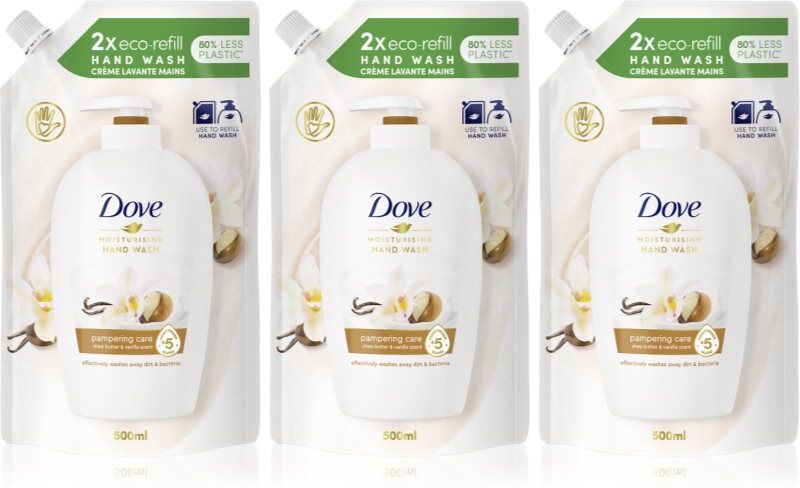
Dove Moisturizing Hand Wash Pampering Care setDove Moisturizing Hand Wash Pampering Care, 1 pc, Refills for Women, Discover a practical bundle of products designed to enhance your everyday moments. DoveMoisturizing Hand WashPampering Care set takes the hassle out of choosing by offering a combination of popular products. Now available together in one convenient pack. The set contains: Dove Purely Pampering Shea Butter & Vanilla liquid soap refill 3x500.00 ml Characteristics: a set at a favourable price has a pleasant fragrance leaves a refreshing feeling has softening effects nature-friendly packaging Ingredients: shea butter – nourishes, helps retain necessary hydration in skin, adds softness and smoothness, provides protection against drying and harmful external influences How to use: Follow the instructions on the package.6,40 £*Shipping: 3,99 £Secure redirect to the provider
-
Nourison Tranquility Area RugDiscover a special feeling of serene elegance in this uniquely refined collection of contemporary area rugs. In subtly varied palettes of soft color and muted neutrals, these distinctive designs will grace any room with a note of quiet sophistication.249,00 $*Shipping: 0,00 $Secure redirect to the provider
-
Nourison Tranquility Area RugDiscover a special feeling of serene elegance in this uniquely refined collection of contemporary area rugs. In subtly varied palettes of soft color and muted neutrals, these distinctive designs will grace any room with a note of quiet sophistication.949,00 $*Shipping: 0,00 $Secure redirect to the provider
-
What is morality?
Morality refers to a set of principles or values that guide individuals on what is considered right or wrong behavior. It is a code of conduct that helps people make ethical decisions and distinguish between good and bad actions. Morality is often influenced by cultural, religious, and societal norms, and it plays a crucial role in shaping how individuals interact with others and navigate complex ethical dilemmas. **
-
Is there only subjective morality or is there also objective morality?
There is ongoing debate about whether morality is purely subjective or if there are objective moral truths. Some argue that morality is entirely subjective, meaning that it is based on individual beliefs, cultural norms, and personal experiences. Others believe in the existence of objective moral principles that are independent of individual perspectives and cultural influences. This debate is complex and has been discussed by philosophers and ethicists for centuries, and there is no consensus on the matter. **
-
Did Nietzsche want to abolish morality or enforce the master morality?
Nietzsche did not want to abolish morality altogether, but rather to challenge and critique the existing moral values of his time. He sought to undermine the traditional Christian morality, which he saw as promoting weakness and submission, and instead advocated for the reevaluation and redefinition of values based on what he called the "master morality." This master morality emphasized strength, power, and individual will, and Nietzsche believed it to be more in line with human nature and the pursuit of greatness. Therefore, Nietzsche aimed to enforce the master morality as a replacement for the prevailing moral values of his time. **
-
Can one afford morality?
Morality is not something that can be bought or sold, as it is a set of principles and values that guide one's actions and decisions. While there may be costs associated with living a moral life, such as making sacrifices or facing challenges, ultimately, morality is a choice that individuals make based on their beliefs and values. Therefore, one can afford morality by prioritizing it in their decision-making and actions, regardless of their financial situation. **
Similar search terms for Morality
-
Nourison Tranquility Area RugDiscover a special feeling of serene elegance in this uniquely refined collection of contemporary area rugs. In subtly varied palettes of soft color and muted neutrals, these distinctive designs will grace any room with a note of quiet sophistication.199,00 $*Shipping: 0,00 $Secure redirect to the provider
-
Nourison Tranquility Area RugDiscover a special feeling of serene elegance in this uniquely refined collection of contemporary area rugs. In subtly varied palettes of soft color and muted neutrals, these distinctive designs will grace any room with a note of quiet sophistication.249,00 $*Shipping: 0,00 $Secure redirect to the provider
-
What is Philistine morality?
Philistine morality refers to a set of values and beliefs that prioritize material wealth, superficial appearances, and conformity to societal norms over deeper ethical considerations. It is often associated with a lack of intellectual or artistic appreciation, as well as a focus on immediate gratification and self-interest. The term "Philistine" originally referred to a group of people in ancient times who were considered uncultured and unrefined, and today it is used metaphorically to criticize individuals or societies that prioritize materialism and conformity over more meaningful or ethical pursuits. **
-
Is morality scientifically explainable?
Morality is a complex concept that is influenced by a variety of factors, including cultural, social, and psychological elements. While scientific research can provide insights into the origins and development of moral beliefs and behaviors, it may not be able to fully explain the subjective and value-laden nature of morality. Additionally, moral judgments often involve emotions, intuitions, and personal experiences that may not be easily captured or explained by scientific methods alone. Therefore, while science can contribute to our understanding of morality, it may not be able to provide a complete and definitive explanation. **
-
Does morality bring happiness?
Morality can bring happiness in the sense that living a moral life can lead to a sense of fulfillment, inner peace, and positive relationships with others. When we act in accordance with our moral values, we often experience a sense of satisfaction and contentment. However, it's important to note that happiness is a complex and subjective experience, and the relationship between morality and happiness can vary for different individuals and in different circumstances. Ultimately, the pursuit of morality can contribute to a meaningful and fulfilling life, which can in turn lead to a sense of happiness. **
-
Does morality need God?
Morality does not necessarily need God in order to exist. Many people believe that morality can be derived from human reason, empathy, and a sense of justice. Philosophers and ethicists have developed various secular moral frameworks, such as utilitarianism and Kantian ethics, which do not rely on the existence of a divine being. While religion can certainly influence and shape moral beliefs for many people, it is not the only source of moral guidance. Ultimately, the question of whether morality needs God is a complex and deeply personal one, with different individuals and cultures holding diverse perspectives on the matter. **
* All prices are inclusive of VAT and, if applicable, plus shipping costs. The offer information is based on the details provided by the respective shop and is updated through automated processes. Real-time updates do not occur, so deviations can occur in individual cases. ** Note: Parts of this content were created by AI.