Buy miragespa.eu ?
We are moving the project
miragespa.eu .
Are you interested in purchasing the domain
miragespa.eu ?
domain@kv-gmbh.de · 0541-91531010
Buy miragespa.eu ?
What is an electrophilic reaction?
An electrophilic reaction is a type of chemical reaction where an electrophile, which is a species that seeks electrons, reacts with a nucleophile, which is a species that donates electrons. The electrophile accepts a pair of electrons from the nucleophile, leading to the formation of a new chemical bond. This type of reaction is common in organic chemistry and is often used to introduce new functional groups onto a molecule. **
Is water electrophilic or nucleophilic?
Water is considered nucleophilic because it has a lone pair of electrons on the oxygen atom, which can be donated to an electrophile in a chemical reaction. This lone pair of electrons allows water to act as a nucleophile, meaning it can attack positively charged or electron-deficient species in a chemical reaction. **

Similar search terms for Electrophilic
Top-Angebote
Products related to Electrophilic:
-
Dove Purely Pampering Shea Butter & Vanilla setDove Purely Pampering Shea Butter & Vanilla, 1 pc, Cosmetic Sets for Women, Discover a practical bundle of products designed to enhance your everyday moments. DovePurely PamperingShea Butter & Vanilla set takes the hassle out of choosing by offering a combination of popular products. Now available together in one convenient pack. The set contains: Dove Purely Pampering Shea Butter & Vanilla creamy tablet for washing 3x90.00 g Characteristics: cleans skin deeply cleans the skin gently do not irritate or dry out skin nourishes and hydrates protects the skin soothes irritation gives a rich lather Ingredients: shea butter – nourishes, helps retain necessary hydration in skin, adds softness and smoothness, provides protection against drying and harmful external influences How to use: Follow the instructions on the package. Apply the soap to the skin, lather gently, and massage. Rinse with lukewarm water. Apply at any time during the day.4,30 £*Shipping: 3,99 £Secure redirect to the provider
-
Nourison Tranquility Area RugDiscover a special feeling of serene elegance in this uniquely refined collection of contemporary area rugs. In subtly varied palettes of soft color and muted neutrals, these distinctive designs will grace any room with a note of quiet sophistication.249,00 $*Shipping: 0,00 $Secure redirect to the provider
-
Palmolive Thermal Spa Pampering Oil shower gel 250 mlPalmolive Thermal Spa Pampering Oil, 250 ml, Shower Gels for Women, Do you want to transform a simple shower into an exceptional experience imbued with a pleasant fragrance? Palmolive Thermal Spa Pampering Oil shower gel will help you do so. While your senses are being pampered by its irresistible scent, its foaming texture will effectively rid your skin of all impurities without drying it out unnecessarily. So, you will be leaving your bath or shower with perfectly clean and velvety smooth skin that has a wonderful aroma. This, too, makes the shower gel a crucial feature of your everyday hygiene routine, turning it into a pleasant ritual you will look forward to. Characteristics: nourishes and cares for the skin makes skin feel comfortable moisturises intensely Ingredients: contains a minimum of 95% ingredients of natural origin How to use: Suitable for everyday use.3,30 £*Shipping: 3,99 £Secure redirect to the provider


-
What is electrophilic addition in chemistry?
Electrophilic addition is a type of chemical reaction where an electrophile (an electron-deficient species) reacts with a nucleophile (an electron-rich species) to form a new molecule. This reaction typically occurs with unsaturated compounds like alkenes or alkynes, where the pi bond is broken and new sigma bonds are formed. Electrophilic addition reactions are commonly seen in organic chemistry and are important in the synthesis of various organic compounds. **
-
What is the electrophilic addition 6?
Electrophilic addition 6 is a chemical reaction in which an electrophile (an electron-deficient species) adds to a double bond, resulting in the formation of two new single bonds. This type of reaction is commonly seen in the addition of hydrogen halides (such as HCl or HBr) to alkenes. The electrophile (in this case, the hydrogen halide) is attracted to the electron-rich double bond and adds across it, breaking the π bond and forming two new σ bonds. This type of reaction is important in organic chemistry for the synthesis of various organic compounds. **
-
What are nucleophilic and electrophilic reagents?
Nucleophilic reagents are molecules or ions that are electron-rich and are attracted to electron-deficient sites in other molecules. They donate a pair of electrons to form a new covalent bond. Electrophilic reagents, on the other hand, are electron-deficient species that are attracted to electron-rich sites in other molecules. They accept a pair of electrons to form a new covalent bond. Both types of reagents play important roles in organic chemistry reactions by participating in bond formation processes. **
-
Why do aromatics not undergo electrophilic addition?
Aromatics do not undergo electrophilic addition because of their stability and the delocalization of their pi electrons. The delocalized pi electrons in the aromatic ring create a stable electron cloud, making it difficult for electrophiles to attack and break the aromatic system. Instead, aromatics typically undergo electrophilic substitution reactions, where an electrophile substitutes for a hydrogen atom on the aromatic ring, while the aromatic system remains intact. This stability and resistance to electrophilic addition is a key characteristic of aromatic compounds and is a result of their unique bonding and electron distribution. **


Doesn't electrophilic addition always occur during esterification?
No, electrophilic addition does not always occur during esterification. Esterification is a chemical reaction between an alcohol and a carboxylic acid to form an ester and water. This reaction involves the nucleophilic substitution of the hydroxyl group of the alcohol with the carboxyl group of the carboxylic acid, rather than electrophilic addition. The reaction is catalyzed by an acid, such as sulfuric acid or hydrochloric acid, which helps to protonate the hydroxyl group and make it a better leaving group. Therefore, esterification does not involve electrophilic addition. **
Why is Mg2+ electrophilic, but F- is not?
Mg2+ is electrophilic because it is a cation with a positive charge, which means it is electron-deficient and can readily accept electrons from a nucleophile. In contrast, F- is not electrophilic because it is an anion with a negative charge, making it electron-rich and less likely to accept electrons from a nucleophile. Additionally, the small size and high charge density of Mg2+ make it more polarizing and able to attract electron-rich species, while the larger size and lower charge density of F- make it less effective at attracting electrons. **
Top-Angebote
Products related to Electrophilic:
-
I Love Wellness Calm bath salt for relaxation 500 gI Love Wellness Calm, 500 g, Bath Salts for Women, Do you love long baths in nice hot water? Your favourite relaxation ritual can be enhanced and taken to another level by I Love Wellness Calmbath salts. It lets you create a fragrant salt bath right in your own home, allowing tension and feelings of inner turmoil to melt away while creating a wonderful sense of well-being. But you don't just get the relaxation you deserve, although the intoxicating smell of salt certainly invites you to do so. Apart from relaxation, your body will also be treated to regeneration. Salt is rich in natural minerals, so it will help with skin regeneration and contribute to relieving any skin issues you may have. Characteristics: relaxing effect has a pleasant fragrance moisturises and softens strengthens the skin’s defences has a relaxing effect on the muscles of the body Ingredients: vegan product camomile extract – soothes, counteracts irritation, helps reduce redness and promotes regeneration How to use: Pour into a warm bath and allow to dissolve.9,70 £*Shipping: 3,99 £Secure redirect to the provider
-
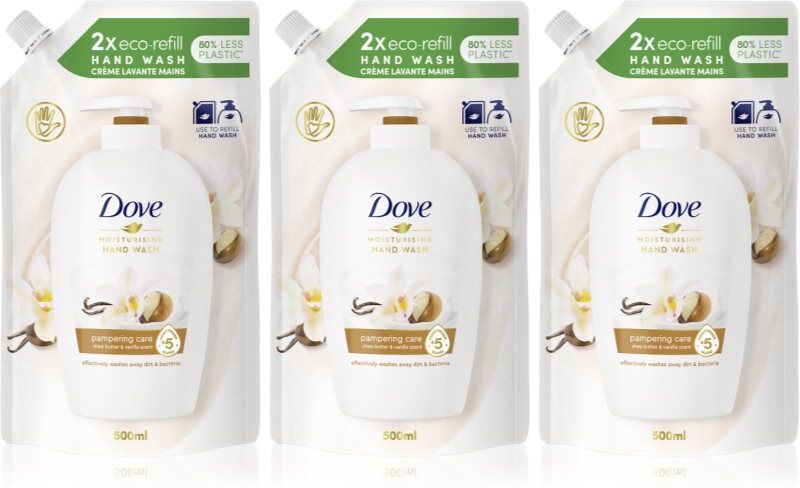
Dove Moisturizing Hand Wash Pampering Care setDove Moisturizing Hand Wash Pampering Care, 1 pc, Refills for Women, Discover a practical bundle of products designed to enhance your everyday moments. DoveMoisturizing Hand WashPampering Care set takes the hassle out of choosing by offering a combination of popular products. Now available together in one convenient pack. The set contains: Dove Purely Pampering Shea Butter & Vanilla liquid soap refill 3x500.00 ml Characteristics: a set at a favourable price has a pleasant fragrance leaves a refreshing feeling has softening effects nature-friendly packaging Ingredients: shea butter – nourishes, helps retain necessary hydration in skin, adds softness and smoothness, provides protection against drying and harmful external influences How to use: Follow the instructions on the package.6,90 £*Shipping: 3,99 £Secure redirect to the provider
-
Dove Purely Pampering Shea Butter & Vanilla setDove Purely Pampering Shea Butter & Vanilla, 1 pc, Cosmetic Sets for Women, Discover a practical bundle of products designed to enhance your everyday moments. DovePurely PamperingShea Butter & Vanilla set takes the hassle out of choosing by offering a combination of popular products. Now available together in one convenient pack. The set contains: Dove Purely Pampering Shea Butter & Vanilla creamy tablet for washing 3x90.00 g Characteristics: cleans skin deeply cleans the skin gently do not irritate or dry out skin nourishes and hydrates protects the skin soothes irritation gives a rich lather Ingredients: shea butter – nourishes, helps retain necessary hydration in skin, adds softness and smoothness, provides protection against drying and harmful external influences How to use: Follow the instructions on the package. Apply the soap to the skin, lather gently, and massage. Rinse with lukewarm water. Apply at any time during the day.4,30 £*Shipping: 3,99 £Secure redirect to the provider
-
Nourison Tranquility Area RugDiscover a special feeling of serene elegance in this uniquely refined collection of contemporary area rugs. In subtly varied palettes of soft color and muted neutrals, these distinctive designs will grace any room with a note of quiet sophistication.249,00 $*Shipping: 0,00 $Secure redirect to the provider
-
What is an electrophilic reaction?
An electrophilic reaction is a type of chemical reaction where an electrophile, which is a species that seeks electrons, reacts with a nucleophile, which is a species that donates electrons. The electrophile accepts a pair of electrons from the nucleophile, leading to the formation of a new chemical bond. This type of reaction is common in organic chemistry and is often used to introduce new functional groups onto a molecule. **
-
Is water electrophilic or nucleophilic?
Water is considered nucleophilic because it has a lone pair of electrons on the oxygen atom, which can be donated to an electrophile in a chemical reaction. This lone pair of electrons allows water to act as a nucleophile, meaning it can attack positively charged or electron-deficient species in a chemical reaction. **
-
What is electrophilic addition in chemistry?
Electrophilic addition is a type of chemical reaction where an electrophile (an electron-deficient species) reacts with a nucleophile (an electron-rich species) to form a new molecule. This reaction typically occurs with unsaturated compounds like alkenes or alkynes, where the pi bond is broken and new sigma bonds are formed. Electrophilic addition reactions are commonly seen in organic chemistry and are important in the synthesis of various organic compounds. **
-
What is the electrophilic addition 6?
Electrophilic addition 6 is a chemical reaction in which an electrophile (an electron-deficient species) adds to a double bond, resulting in the formation of two new single bonds. This type of reaction is commonly seen in the addition of hydrogen halides (such as HCl or HBr) to alkenes. The electrophile (in this case, the hydrogen halide) is attracted to the electron-rich double bond and adds across it, breaking the π bond and forming two new σ bonds. This type of reaction is important in organic chemistry for the synthesis of various organic compounds. **
Similar search terms for Electrophilic
-
Palmolive Thermal Spa Pampering Oil shower gel 250 mlPalmolive Thermal Spa Pampering Oil, 250 ml, Shower Gels for Women, Do you want to transform a simple shower into an exceptional experience imbued with a pleasant fragrance? Palmolive Thermal Spa Pampering Oil shower gel will help you do so. While your senses are being pampered by its irresistible scent, its foaming texture will effectively rid your skin of all impurities without drying it out unnecessarily. So, you will be leaving your bath or shower with perfectly clean and velvety smooth skin that has a wonderful aroma. This, too, makes the shower gel a crucial feature of your everyday hygiene routine, turning it into a pleasant ritual you will look forward to. Characteristics: nourishes and cares for the skin makes skin feel comfortable moisturises intensely Ingredients: contains a minimum of 95% ingredients of natural origin How to use: Suitable for everyday use.3,30 £*Shipping: 3,99 £Secure redirect to the provider
-
Nourison Tranquility Area RugDiscover a special feeling of serene elegance in this uniquely refined collection of contemporary area rugs. In subtly varied palettes of soft color and muted neutrals, these distinctive designs will grace any room with a note of quiet sophistication.1329,00 $*Shipping: 0,00 $Secure redirect to the provider
-
Nourison Tranquility Area RugDiscover a special feeling of serene elegance in this uniquely refined collection of contemporary area rugs. In subtly varied palettes of soft color and muted neutrals, these distinctive designs will grace any room with a note of quiet sophistication.949,00 $*Shipping: 0,00 $Secure redirect to the provider
-
What are nucleophilic and electrophilic reagents?
Nucleophilic reagents are molecules or ions that are electron-rich and are attracted to electron-deficient sites in other molecules. They donate a pair of electrons to form a new covalent bond. Electrophilic reagents, on the other hand, are electron-deficient species that are attracted to electron-rich sites in other molecules. They accept a pair of electrons to form a new covalent bond. Both types of reagents play important roles in organic chemistry reactions by participating in bond formation processes. **
-
Why do aromatics not undergo electrophilic addition?
Aromatics do not undergo electrophilic addition because of their stability and the delocalization of their pi electrons. The delocalized pi electrons in the aromatic ring create a stable electron cloud, making it difficult for electrophiles to attack and break the aromatic system. Instead, aromatics typically undergo electrophilic substitution reactions, where an electrophile substitutes for a hydrogen atom on the aromatic ring, while the aromatic system remains intact. This stability and resistance to electrophilic addition is a key characteristic of aromatic compounds and is a result of their unique bonding and electron distribution. **
-
Doesn't electrophilic addition always occur during esterification?
No, electrophilic addition does not always occur during esterification. Esterification is a chemical reaction between an alcohol and a carboxylic acid to form an ester and water. This reaction involves the nucleophilic substitution of the hydroxyl group of the alcohol with the carboxyl group of the carboxylic acid, rather than electrophilic addition. The reaction is catalyzed by an acid, such as sulfuric acid or hydrochloric acid, which helps to protonate the hydroxyl group and make it a better leaving group. Therefore, esterification does not involve electrophilic addition. **
-
Why is Mg2+ electrophilic, but F- is not?
Mg2+ is electrophilic because it is a cation with a positive charge, which means it is electron-deficient and can readily accept electrons from a nucleophile. In contrast, F- is not electrophilic because it is an anion with a negative charge, making it electron-rich and less likely to accept electrons from a nucleophile. Additionally, the small size and high charge density of Mg2+ make it more polarizing and able to attract electron-rich species, while the larger size and lower charge density of F- make it less effective at attracting electrons. **
* All prices are inclusive of VAT and, if applicable, plus shipping costs. The offer information is based on the details provided by the respective shop and is updated through automated processes. Real-time updates do not occur, so deviations can occur in individual cases. ** Note: Parts of this content were created by AI.