Buy miragespa.eu ?
We are moving the project
miragespa.eu .
Are you interested in purchasing the domain
miragespa.eu ?
domain@kv-gmbh.de · 0541-91531010
Buy miragespa.eu ?
What is the deontological perspective?
The deontological perspective is an ethical theory that focuses on the inherent rightness or wrongness of actions themselves, rather than the consequences of those actions. It is based on the idea that certain actions are morally obligatory regardless of their outcomes. Deontologists believe that individuals have a duty to follow certain moral rules or principles, such as honesty or respecting others' autonomy, regardless of the potential benefits or harms that may result. This perspective is often associated with philosophers like Immanuel Kant, who argued that moral principles are universal and apply to all rational beings. **
What is meant by deontological and teleological?
Deontological ethics is an ethical theory that focuses on the inherent rightness or wrongness of actions themselves, rather than the consequences of those actions. It emphasizes the importance of following moral rules and duties, regardless of the outcomes. On the other hand, teleological ethics, also known as consequentialism, is an ethical theory that evaluates the morality of actions based on their outcomes or consequences. It emphasizes the idea that the rightness or wrongness of an action is determined by the overall good or bad results it produces. In summary, deontological ethics focuses on the inherent nature of actions, while teleological ethics focuses on the outcomes of actions. **

Similar search terms for Deontological
Top-Angebote
Products related to Deontological:
-
Palmolive Thermal Spa Pampering Oil shower gel 250 mlPalmolive Thermal Spa Pampering Oil, 250 ml, Shower Gels for Women, Do you want to transform a simple shower into an exceptional experience imbued with a pleasant fragrance? Palmolive Thermal Spa Pampering Oil shower gel will help you do so. While your senses are being pampered by its irresistible scent, its foaming texture will effectively rid your skin of all impurities without drying it out unnecessarily. So, you will be leaving your bath or shower with perfectly clean and velvety smooth skin that has a wonderful aroma. This, too, makes the shower gel a crucial feature of your everyday hygiene routine, turning it into a pleasant ritual you will look forward to. Characteristics: nourishes and cares for the skin makes skin feel comfortable moisturises intensely Ingredients: contains a minimum of 95% ingredients of natural origin How to use: Suitable for everyday use.2,64 £*Shipping: 3,99 £Secure redirect to the provider
-
Nourison Tranquility Area RugDiscover a special feeling of serene elegance in this uniquely refined collection of contemporary area rugs. In subtly varied palettes of soft color and muted neutrals, these distinctive designs will grace any room with a note of quiet sophistication.249,00 $*Shipping: 0,00 $Secure redirect to the provider
-
Palmolive Naturals Pampering Touch shower milk with coconut 250 mlPalmolive Naturals Pampering Touch, 250 ml, Shower Creams for Women, Are you the type who does not undervalue everyday hygiene, but has skin that is prone to excessively drying-out when washed with normal shower gel? Palmolive Naturals Pampering Touchshower cream is the right choice for you. It not only helps remove all impurities when bathing, but also provides skin with much-needed moisture while nurturing and pampering it with its soft, creamy texture. This shower cream protects skin’s balance, preventing it from drying out and making sure the natural hydrolipid barrier on skin’s surface does not get damaged. Characteristics: it cleans the skin gently and rids it of dirt leaves skin velvety soft and smooth moisturises intensely softens and improves elasticity How to use: Apply when showering or taking a bath. Apply to the skin all over the body, then rinse with warm water.2,04 £*Shipping: 3,99 £Secure redirect to the provider
-
Nourison Tranquility Area RugDiscover a special feeling of serene elegance in this uniquely refined collection of contemporary area rugs. In subtly varied palettes of soft color and muted neutrals, these distinctive designs will grace any room with a note of quiet sophistication.949,00 $*Shipping: 0,00 $Secure redirect to the provider




-
Does Kant's deontological ethics contradict Aristotle's eudaemonistic ethics?
Kant's deontological ethics and Aristotle's eudaemonistic ethics have some fundamental differences, but they do not necessarily contradict each other. Kant's ethics focus on duty and the intention behind actions, while Aristotle's ethics emphasize achieving eudaimonia, or human flourishing, through virtuous actions. While Kant's emphasis on duty can sometimes conflict with Aristotle's emphasis on virtue, both ethical theories ultimately aim to guide individuals towards leading a good and moral life. Therefore, while they may approach ethics from different perspectives, they can be seen as complementary rather than contradictory. **
-
Does discourse ethics have a teleological or deontological approach?
Discourse ethics is primarily associated with a deontological approach. It focuses on the principles of communication and interaction between individuals, emphasizing the importance of ethical norms and rules in guiding discourse. The goal is to ensure that communication is based on mutual respect, equality, and rationality, rather than aiming towards a specific outcome or goal. By prioritizing the ethical principles of communication, discourse ethics aims to create a fair and just dialogue among participants. **
-
What is the difference between deontological ethics and utilitarianism?
Deontological ethics is an ethical theory that focuses on the inherent rightness or wrongness of actions themselves, regardless of their consequences. It emphasizes the importance of following moral rules and duties, such as telling the truth or keeping promises, regardless of the outcomes. On the other hand, utilitarianism is a consequentialist ethical theory that evaluates the morality of actions based on their outcomes. It prioritizes maximizing overall happiness or well-being for the greatest number of people, often through the calculation of benefits and harms. In summary, deontological ethics emphasizes the inherent morality of actions, while utilitarianism focuses on the consequences of actions. **
-
Is deontological ethics exactly the same as the categorical imperative?
Deontological ethics is a broader ethical theory that states that actions are inherently right or wrong, regardless of their consequences. The categorical imperative, on the other hand, is a specific formulation within deontological ethics proposed by Immanuel Kant. While the categorical imperative is a key component of deontological ethics, deontological ethics encompasses a wider range of principles and theories beyond just the categorical imperative. **


What are the differences between deontological ethics and utilitarian ethics?
Deontological ethics, also known as duty-based ethics, focuses on the inherent rightness or wrongness of actions themselves, regardless of their consequences. It emphasizes following moral rules and duties, such as telling the truth or keeping promises, based on principles like the categorical imperative. On the other hand, utilitarian ethics, also known as consequentialist ethics, prioritizes the outcomes or consequences of actions. It aims to maximize overall happiness or well-being for the greatest number of people, often through the calculation of benefits and harms. While deontological ethics emphasizes duty and rules, utilitarian ethics prioritizes the greatest good for the greatest number. **
What is the difference between deontological ethics and utilitarian ethics?
Deontological ethics, also known as duty-based ethics, focuses on the inherent rightness or wrongness of actions themselves, regardless of their consequences. This means that certain actions are considered morally right or wrong based on whether they adhere to a set of rules or principles. On the other hand, utilitarian ethics, also known as consequentialist ethics, evaluates the morality of actions based on their outcomes or consequences. In utilitarianism, the rightness or wrongness of an action is determined by its ability to produce the greatest overall happiness or pleasure for the greatest number of people. **
Top-Angebote
Products related to Deontological:
-
I Love Wellness Calm bath salt for relaxation 500 gI Love Wellness Calm, 500 g, Bath Salts for Women, Do you love long baths in nice hot water? Your favourite relaxation ritual can be enhanced and taken to another level by I Love Wellness Calmbath salts. It lets you create a fragrant salt bath right in your own home, allowing tension and feelings of inner turmoil to melt away while creating a wonderful sense of well-being. But you don't just get the relaxation you deserve, although the intoxicating smell of salt certainly invites you to do so. Apart from relaxation, your body will also be treated to regeneration. Salt is rich in natural minerals, so it will help with skin regeneration and contribute to relieving any skin issues you may have. Characteristics: relaxing effect has a pleasant fragrance moisturises and softens strengthens the skin’s defences has a relaxing effect on the muscles of the body Ingredients: vegan product camomile extract – soothes, counteracts irritation, helps reduce redness and promotes regeneration How to use: Pour into a warm bath and allow to dissolve.7,65 £*Shipping: 3,99 £Secure redirect to the provider
-
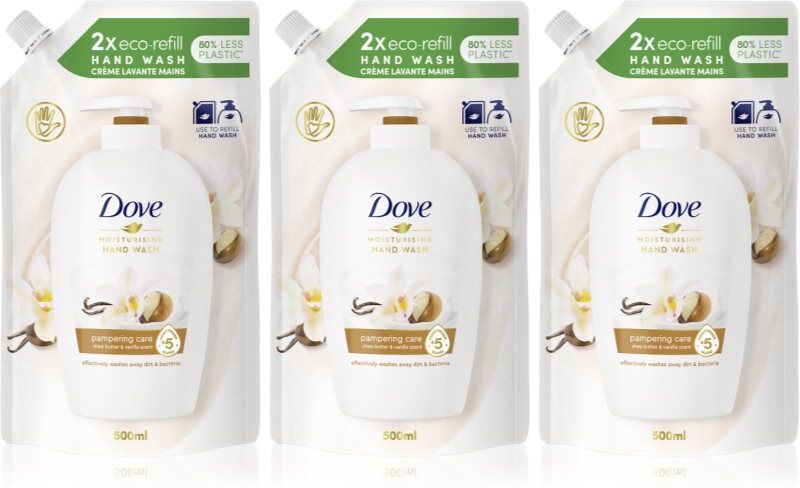
Dove Moisturizing Hand Wash Pampering Care setDove Moisturizing Hand Wash Pampering Care, 1 pc, Refills for Women, Discover a practical bundle of products designed to enhance your everyday moments. DoveMoisturizing Hand WashPampering Care set takes the hassle out of choosing by offering a combination of popular products. Now available together in one convenient pack. The set contains: Dove Purely Pampering Shea Butter & Vanilla liquid soap refill 3x500.00 ml Characteristics: a set at a favourable price has a pleasant fragrance leaves a refreshing feeling has softening effects nature-friendly packaging Ingredients: shea butter – nourishes, helps retain necessary hydration in skin, adds softness and smoothness, provides protection against drying and harmful external influences How to use: Follow the instructions on the package.6,40 £*Shipping: 3,99 £Secure redirect to the provider
-
Palmolive Thermal Spa Pampering Oil shower gel 250 mlPalmolive Thermal Spa Pampering Oil, 250 ml, Shower Gels for Women, Do you want to transform a simple shower into an exceptional experience imbued with a pleasant fragrance? Palmolive Thermal Spa Pampering Oil shower gel will help you do so. While your senses are being pampered by its irresistible scent, its foaming texture will effectively rid your skin of all impurities without drying it out unnecessarily. So, you will be leaving your bath or shower with perfectly clean and velvety smooth skin that has a wonderful aroma. This, too, makes the shower gel a crucial feature of your everyday hygiene routine, turning it into a pleasant ritual you will look forward to. Characteristics: nourishes and cares for the skin makes skin feel comfortable moisturises intensely Ingredients: contains a minimum of 95% ingredients of natural origin How to use: Suitable for everyday use.2,64 £*Shipping: 3,99 £Secure redirect to the provider
-
Nourison Tranquility Area RugDiscover a special feeling of serene elegance in this uniquely refined collection of contemporary area rugs. In subtly varied palettes of soft color and muted neutrals, these distinctive designs will grace any room with a note of quiet sophistication.249,00 $*Shipping: 0,00 $Secure redirect to the provider
-
What is the deontological perspective?
The deontological perspective is an ethical theory that focuses on the inherent rightness or wrongness of actions themselves, rather than the consequences of those actions. It is based on the idea that certain actions are morally obligatory regardless of their outcomes. Deontologists believe that individuals have a duty to follow certain moral rules or principles, such as honesty or respecting others' autonomy, regardless of the potential benefits or harms that may result. This perspective is often associated with philosophers like Immanuel Kant, who argued that moral principles are universal and apply to all rational beings. **
-
What is meant by deontological and teleological?
Deontological ethics is an ethical theory that focuses on the inherent rightness or wrongness of actions themselves, rather than the consequences of those actions. It emphasizes the importance of following moral rules and duties, regardless of the outcomes. On the other hand, teleological ethics, also known as consequentialism, is an ethical theory that evaluates the morality of actions based on their outcomes or consequences. It emphasizes the idea that the rightness or wrongness of an action is determined by the overall good or bad results it produces. In summary, deontological ethics focuses on the inherent nature of actions, while teleological ethics focuses on the outcomes of actions. **
-
Does Kant's deontological ethics contradict Aristotle's eudaemonistic ethics?
Kant's deontological ethics and Aristotle's eudaemonistic ethics have some fundamental differences, but they do not necessarily contradict each other. Kant's ethics focus on duty and the intention behind actions, while Aristotle's ethics emphasize achieving eudaimonia, or human flourishing, through virtuous actions. While Kant's emphasis on duty can sometimes conflict with Aristotle's emphasis on virtue, both ethical theories ultimately aim to guide individuals towards leading a good and moral life. Therefore, while they may approach ethics from different perspectives, they can be seen as complementary rather than contradictory. **
-
Does discourse ethics have a teleological or deontological approach?
Discourse ethics is primarily associated with a deontological approach. It focuses on the principles of communication and interaction between individuals, emphasizing the importance of ethical norms and rules in guiding discourse. The goal is to ensure that communication is based on mutual respect, equality, and rationality, rather than aiming towards a specific outcome or goal. By prioritizing the ethical principles of communication, discourse ethics aims to create a fair and just dialogue among participants. **
Similar search terms for Deontological
-
Palmolive Naturals Pampering Touch shower milk with coconut 250 mlPalmolive Naturals Pampering Touch, 250 ml, Shower Creams for Women, Are you the type who does not undervalue everyday hygiene, but has skin that is prone to excessively drying-out when washed with normal shower gel? Palmolive Naturals Pampering Touchshower cream is the right choice for you. It not only helps remove all impurities when bathing, but also provides skin with much-needed moisture while nurturing and pampering it with its soft, creamy texture. This shower cream protects skin’s balance, preventing it from drying out and making sure the natural hydrolipid barrier on skin’s surface does not get damaged. Characteristics: it cleans the skin gently and rids it of dirt leaves skin velvety soft and smooth moisturises intensely softens and improves elasticity How to use: Apply when showering or taking a bath. Apply to the skin all over the body, then rinse with warm water.2,04 £*Shipping: 3,99 £Secure redirect to the provider
-
Nourison Tranquility Area RugDiscover a special feeling of serene elegance in this uniquely refined collection of contemporary area rugs. In subtly varied palettes of soft color and muted neutrals, these distinctive designs will grace any room with a note of quiet sophistication.949,00 $*Shipping: 0,00 $Secure redirect to the provider
-
Nourison Tranquility Area RugDiscover a special feeling of serene elegance in this uniquely refined collection of contemporary area rugs. In subtly varied palettes of soft color and muted neutrals, these distinctive designs will grace any room with a note of quiet sophistication.199,00 $*Shipping: 0,00 $Secure redirect to the provider
-
What is the difference between deontological ethics and utilitarianism?
Deontological ethics is an ethical theory that focuses on the inherent rightness or wrongness of actions themselves, regardless of their consequences. It emphasizes the importance of following moral rules and duties, such as telling the truth or keeping promises, regardless of the outcomes. On the other hand, utilitarianism is a consequentialist ethical theory that evaluates the morality of actions based on their outcomes. It prioritizes maximizing overall happiness or well-being for the greatest number of people, often through the calculation of benefits and harms. In summary, deontological ethics emphasizes the inherent morality of actions, while utilitarianism focuses on the consequences of actions. **
-
Is deontological ethics exactly the same as the categorical imperative?
Deontological ethics is a broader ethical theory that states that actions are inherently right or wrong, regardless of their consequences. The categorical imperative, on the other hand, is a specific formulation within deontological ethics proposed by Immanuel Kant. While the categorical imperative is a key component of deontological ethics, deontological ethics encompasses a wider range of principles and theories beyond just the categorical imperative. **
-
What are the differences between deontological ethics and utilitarian ethics?
Deontological ethics, also known as duty-based ethics, focuses on the inherent rightness or wrongness of actions themselves, regardless of their consequences. It emphasizes following moral rules and duties, such as telling the truth or keeping promises, based on principles like the categorical imperative. On the other hand, utilitarian ethics, also known as consequentialist ethics, prioritizes the outcomes or consequences of actions. It aims to maximize overall happiness or well-being for the greatest number of people, often through the calculation of benefits and harms. While deontological ethics emphasizes duty and rules, utilitarian ethics prioritizes the greatest good for the greatest number. **
-
What is the difference between deontological ethics and utilitarian ethics?
Deontological ethics, also known as duty-based ethics, focuses on the inherent rightness or wrongness of actions themselves, regardless of their consequences. This means that certain actions are considered morally right or wrong based on whether they adhere to a set of rules or principles. On the other hand, utilitarian ethics, also known as consequentialist ethics, evaluates the morality of actions based on their outcomes or consequences. In utilitarianism, the rightness or wrongness of an action is determined by its ability to produce the greatest overall happiness or pleasure for the greatest number of people. **
* All prices are inclusive of VAT and, if applicable, plus shipping costs. The offer information is based on the details provided by the respective shop and is updated through automated processes. Real-time updates do not occur, so deviations can occur in individual cases. ** Note: Parts of this content were created by AI.